
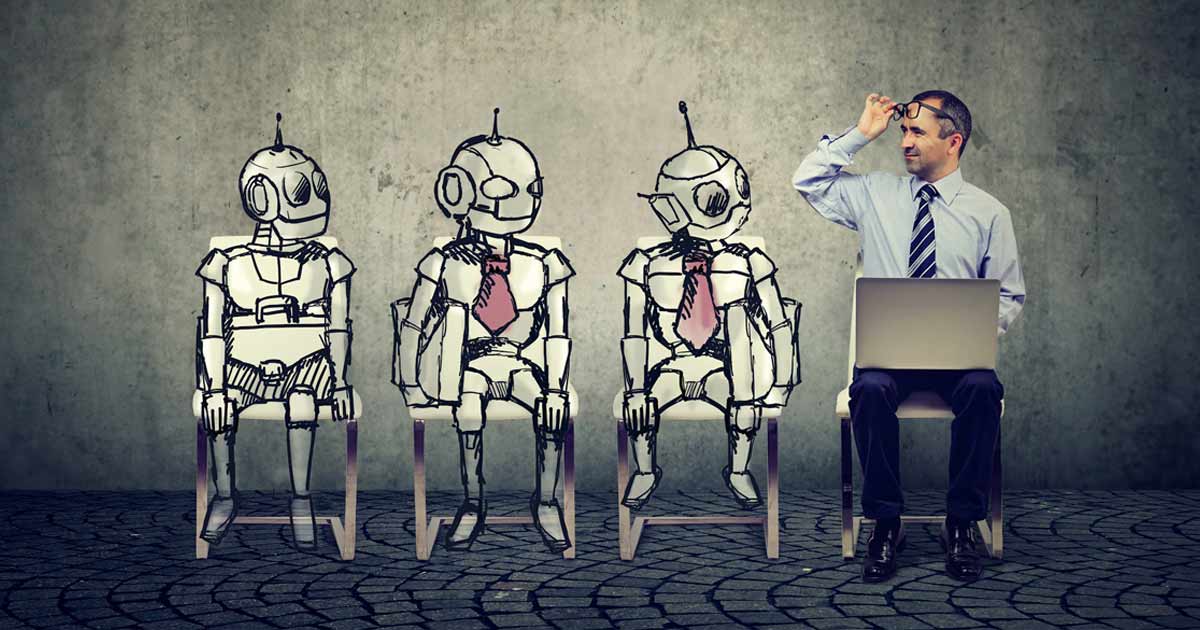
How Tech Giants Are Hiring AI Over Humans in the dynamic heart of Silicon Valley and beyond, the landscape of employment is undergoing a seismic shift. The very companies that pioneered the modern digital revolution are now turning to machines — not just as tools, but as colleagues, analysts, decision-makers, and in some cases, replacements. Yes, tech companies AI hiring trends are moving in a bold new direction, and it’s time we explore why and how this shift is redefining the workforce of tomorrow.
The Rise of Algorithmic Employees
From cloud platforms that manage data autonomously to virtual agents solving customer queries 24/7, artificial intelligence is no longer a future prospect — it’s a current reality. Tech giants like Google, Microsoft, Meta, and Amazon are rapidly integrating AI systems that perform tasks previously assigned to human employees.
This shift isn’t just about automation replacing manual labor — it’s about intelligent systems performing strategic, creative, and analytical roles. AI tools are now writing code, designing websites, forecasting business trends, and even filtering resumes with jaw-dropping precision.
So why the sudden pivot toward AI? The answer lies in a powerful mix of innovation, economic strategy, and market dominance.
Efficiency at Unmatched Scale
AI doesn’t take coffee breaks. It doesn’t call in sick or take vacation. When programmed correctly, it processes data faster than any human team and does it with microscopic error margins. For businesses looking to scale while minimizing overhead, this becomes an irresistible proposition.
Imagine deploying a customer support chatbot that handles thousands of inquiries simultaneously, all while learning and improving over time. Or a machine learning algorithm that reviews legal contracts with perfect recall and logic. These capabilities are not speculative; they are actively deployed today by companies like IBM, Salesforce, and even emerging startups that are disrupting traditional HR paradigms.
The tech companies AI hiring trends show a strategic migration from traditional human teams to AI-driven operations. It’s not about cost-cutting alone — it’s about unmatched scalability and lightning-fast adaptability.
Redefining the Hiring Process
Let’s talk recruitment. Traditionally, hiring has been a human-led process — reviewing resumes, conducting interviews, making judgment calls. Today, that’s rapidly changing.
AI now screens applications using Natural Language Processing (NLP) to assess candidate fit, analyze tone, and even evaluate cultural compatibility. Algorithms trained on successful employee profiles help recruiters predict performance outcomes. This, in turn, leads to faster, data-backed hiring decisions.
But here’s where it gets even more interesting: some companies are now hiring AI — not just using it for recruitment. Instead of adding another analyst to the team, they’re licensing AI systems that analyze market data 24/7. Instead of hiring a designer, they opt for generative AI that creates logos, ads, and UX wireframes on the fly.
In essence, AI isn’t just filtering talent — it is the talent.
The Shift from Human Labor to Machine Intelligence
In industries like finance, healthcare, and media, AI has become a trusted team member. JPMorgan Chase developed COiN (Contract Intelligence), an AI that interprets legal documents in seconds. Meanwhile, Netflix leverages AI not just for recommendations but also for optimizing content production, release timing, and even scripting decisions.
Within the walls of Silicon Valley, the tech companies AI hiring trends reveal a growing preference for AI when the job demands consistency, vast data analysis, or lightning-speed execution.
Amazon’s warehouses are operated with near-military precision using a combination of robotics and AI-driven logistics systems. Apple utilizes AI to refine Siri’s language comprehension. Google’s DeepMind is tackling complex biological challenges like protein folding.
Each of these examples illustrates a broader truth: AI is no longer the sidekick — it’s often the star of the show.
Why Tech Giants Prefer AI Employees
There are several compelling reasons behind this radical workforce evolution:
1. Predictable Performance
AI systems don’t suffer from burnout, emotional bias, or motivational dips. They perform consistently within their programmed parameters, offering predictability — a highly desirable trait in volatile markets.
2. Instant Upskilling
Unlike humans, AI can be upgraded instantly. A software patch or algorithm improvement can enhance its capabilities overnight, without training costs or learning curves.
3. Data Handling at Scale
Tech companies process oceans of data daily. AI thrives in this domain, uncovering patterns and insights faster than any human analyst.
4. Lower Long-Term Costs
While the upfront cost of developing or licensing AI can be substantial, the long-term savings are significant. No salaries, no benefits, no office space — just performance.
5. Adaptability
AI systems can pivot across departments. An NLP engine used for customer service can also be adapted to content generation or product feedback analysis with minimal tweaks.
Where Does This Leave Human Employees?
Amid this technological revolution, the human workforce is standing at a crossroads. But it’s not all doom and gloom. In fact, many roles are evolving rather than vanishing.
Jobs involving emotional intelligence, strategic planning, ethical judgment, and creative innovation remain irreplaceable — at least for now. Moreover, the very rise of AI is creating new job categories: AI trainers, ethicists, prompt engineers, and hybrid AI supervisors.
The tech companies AI hiring trends don’t necessarily signal the extinction of human jobs, but they do require a radical recalibration of skills. The winners in this new economy will be those who embrace adaptability, continuous learning, and collaboration with machines.
Notable AI Replacements (and Experiments)
Let’s take a look at how some top-tier companies are reimagining roles with AI:
- Google: Leveraging AI for code generation through tools like AlphaCode, which can solve coding challenges that once required seasoned engineers.
- Meta (Facebook): Using AI models to moderate content in real time, reducing the need for human reviewers exposed to traumatic content.
- Tesla: Automating production lines with intelligent robotics and integrating AI into vehicle software for self-driving capabilities.
- Microsoft: Integrating Copilot into Office 365, changing how knowledge workers create presentations, documents, and even manage schedules.
- Adobe: Rolling out Firefly, a generative AI that enables designers to create professional-grade images with simple text prompts.
Each of these implementations reflects a growing comfort — and confidence — in AI’s ability to outperform or replace human labor in specific tasks.
The Ethical Debate: Should We Be Worried?
With great power comes great responsibility. And with AI, this maxim has never been more relevant. The move toward hiring AI over humans raises some heavy questions:
- Are we creating mass unemployment under the guise of innovation?
- Who is accountable when AI makes a mistake?
- How do we ensure fairness and transparency in algorithmic decision-making?
Ethical frameworks are struggling to keep pace with technological growth. That’s why regulators, scholars, and companies alike are pushing for responsible AI adoption. Some firms are forming AI ethics boards, and new legislation is being proposed to safeguard against misuse.
Yet, the enthusiasm from C-suites remains high. The tech companies AI hiring trends point to a future where ethical boundaries will be tested — and must be fortified.
What Should Workers Do Now?
The best time to upskill was yesterday. The second-best time is now.
Professionals in all sectors should embrace AI not as a threat but as a tool. Understanding how AI works — even at a basic level — can open doors to new opportunities.
Here are a few suggestions:
- Learn prompt engineering: As generative AI grows, the ability to speak its language will become a superpower.
- Develop hybrid skills: Combine technical literacy with human-centric skills like leadership, empathy, and creativity.
- Take AI literacy courses: Platforms like Coursera, Udemy, and edX now offer courses designed for non-tech professionals.
- Stay informed: Follow industry trends, attend webinars, and read up on the latest in AI policy and ethics.
Remember, AI can only outperform humans in certain areas — the rest still requires a uniquely human touch.
The Silver Lining: New Jobs on the Horizon
History has shown us that every technological disruption eventually creates more jobs than it eliminates. The printing press, electricity, the internet — all sparked temporary dislocation but ultimately led to economic booms.
Already, we’re seeing demand spike for roles such as:
- AI Safety Engineers
- Data Labeling Specialists
- Human-AI Collaboration Designers
- Machine Learning Operations (MLOps) Experts
- AI Compliance Officers
These are jobs that didn’t exist a decade ago but are now integral to AI integration. The tech companies AI hiring trends suggest that while traditional roles may decline, new categories will flourish.
Looking Ahead: Man and Machine, Together
The relationship between humans and AI doesn’t have to be adversarial. In fact, the most promising future lies in symbiosis.
Imagine a workplace where AI handles the grunt work — the spreadsheets, data crunching, routine tasks — freeing humans to think, create, and innovate. Instead of replacement, think augmentation.
Tech companies are already experimenting with co-working models where humans and AI systems collaborate. In these environments, productivity soars, job satisfaction improves, and businesses thrive.
The trend is clear: AI is no longer a backstage player in the tech world — it’s stepping into the spotlight. As tech companies AI hiring trends accelerate, the workforce must evolve with it.
This transformation isn’t about choosing sides between man or machine. It’s about building a world where both can co-exist, complement, and co-create. The future belongs not just to those who code, but to those who adapt — joyfully, thoughtfully, and boldly — to the new rules of work.
Let’s not fear the future — let’s shape it.


